Managing a House in Multiple Occupation (HMO) can be highly profitable, but it also comes with greater legal responsibilities than standard buy-to-let properties.
With increasing enforcement, stricter regulations, and the ongoing evolution of landlord legislation, ensuring your property remains compliant is no longer optional.
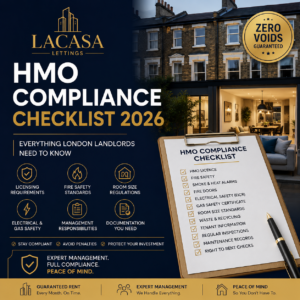
Whether you own a single HMO or a growing portfolio, this HMO Compliance Checklist 2026 will help London landlords stay compliant, protect their rental income, and avoid costly penalties.
What Is an HMO?
A House in Multiple Occupation (HMO) is a property rented by three or more tenants from different households who share facilities such as kitchens, bathrooms, or living spaces.
Common examples include:
- Professional house shares
- Student accommodation
- Shared worker housing
- Large converted properties
Because HMOs accommodate multiple unrelated occupants, they are subject to additional licensing, management, and safety requirements.
Do You Need an HMO Licence?
One of the most common compliance mistakes landlords make is assuming their property does not require a licence.
You may need:
Mandatory HMO Licensing
Required when:
- Five or more tenants live in the property
- Occupants form two or more households
- Facilities are shared
Additional Licensing Schemes
Many London boroughs operate additional licensing schemes that apply to smaller HMOs.
Requirements vary depending on the local authority.
Selective Licensing
Some councils require licensing for privately rented properties in designated areas, regardless of whether they qualify as HMOs.
Always check local licensing requirements before letting your property.
Fire Safety Requirements
Fire safety remains one of the most heavily enforced areas of HMO compliance.
Landlords should ensure:
Smoke Alarms
Working smoke alarms on every floor.
Heat Detectors
Installed in kitchens where appropriate.
Fire Doors
Suitable fire-rated doors fitted where required.
Escape Routes
Clear and accessible emergency exits.
Emergency Lighting
May be required in larger HMOs.
Failure to meet fire safety standards can result in substantial fines and enforcement action.
Room Size Standards
Minimum room sizes are often overlooked by landlords.
Current guidance generally requires:
- Single occupancy rooms to meet minimum floor space requirements
- Double occupancy rooms to exceed higher thresholds
- Adequate communal living areas
Overcrowding can result in licence breaches and enforcement penalties.
Always verify room sizes before advertising or renewing tenancy arrangements.
Electrical Safety Requirements
Every HMO landlord must ensure electrical systems remain safe.
Key requirements include:
Electrical Installation Condition Report (EICR)
Properties must undergo regular electrical inspections by a qualified professional.
Portable Appliance Testing (PAT)
Recommended where landlords provide electrical appliances.
Safe Electrical Installations
All wiring, sockets, and consumer units must be maintained safely.
Electrical compliance is essential for tenant safety and legal protection.
Gas Safety Responsibilities
Landlords must provide:
- Annual Gas Safety Certificate
- Inspection by a Gas Safe registered engineer
- Copies of certificates for tenants
Expired gas certificates are among the most common compliance failures identified during inspections.
Property Management Responsibilities
HMO landlords are responsible for maintaining:
Communal Areas
Shared kitchens, hallways, bathrooms, and living spaces.
Waste Disposal
Adequate bins and waste management arrangements.
Repairs and Maintenance
Prompt action on reported issues.
Safety Equipment
Ensuring alarms, extinguishers, and emergency systems remain operational.
Good management practices help protect both tenants and property value.
Documentation Every HMO Landlord Should Keep
Maintaining accurate records is essential.
Important documents include:
- HMO Licence
- Gas Safety Certificate
- EICR Report
- EPC Certificate
- Fire Safety Records
- Deposit Protection Information
- Right to Rent Documentation
- Maintenance Records
Having organised records can simplify inspections and demonstrate compliance.
Common HMO Compliance Mistakes
Many enforcement actions result from simple oversights.
Common mistakes include:
Expired Licences
Failing to renew licences before expiry.
Missing Fire Doors
Incorrect or non-compliant fire safety installations.
Outdated Certificates
Expired EICRs or Gas Safety Certificates.
Poor Documentation
Missing records during inspections.
Ignoring Local Licensing Rules
Failing to understand borough-specific requirements.
Regular compliance reviews can prevent these issues from escalating.
Penalties for Non-Compliance
The consequences of non-compliance can be severe.
Potential penalties include:
- Significant financial fines
- Rent Repayment Orders
- Licence revocation
- Restrictions on property operation
- Legal proceedings
Beyond financial losses, non-compliance can damage a landlord’s reputation and investment performance.
Why Professional HMO Management Makes Sense
As regulations become more complex, many landlords are choosing professional property management.
Professional management can help with:
- Licensing applications
- Compliance monitoring
- Tenant management
- Property inspections
- Maintenance coordination
- Documentation management
This reduces risk while allowing landlords to focus on growing their portfolios.
Final Thoughts
HMO properties can generate strong returns, but compliance must remain a priority.
Licensing, fire safety, electrical standards, documentation, and ongoing management all play a critical role in protecting both landlords and tenants.
By following this HMO Compliance Checklist 2026, London landlords can reduce risk, avoid costly penalties, and ensure their properties remain fully compliant.
If you’re unsure whether your HMO meets current requirements, a professional compliance review can identify potential issues before they become expensive problems.
Frequently Asked Questions
What is the biggest HMO compliance risk?
Fire safety breaches and licensing failures are among the most common reasons landlords face enforcement action.
Do all HMOs require a licence?
Not always. However, many London boroughs operate additional licensing schemes that capture smaller HMOs.
How often does an EICR need updating?
Electrical inspections are generally required at least every five years, although recommendations may vary depending on circumstances.
Can a property management company handle HMO compliance?
Yes. Professional property management companies often oversee licensing, inspections, maintenance coordination, and compliance monitoring on behalf of landlords.